Document Generation API Buyer’s Guide: What to Check Before You Build
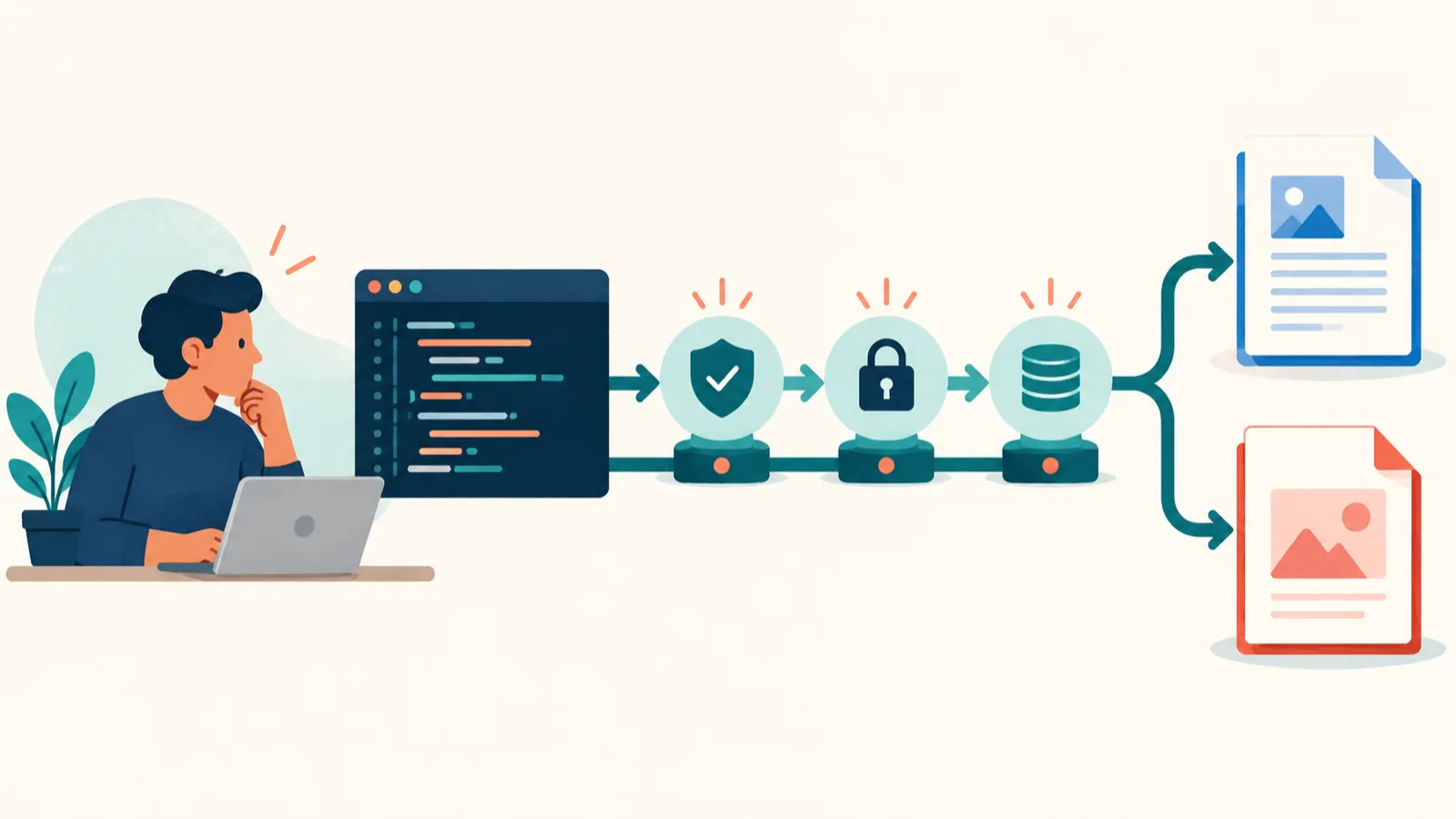
A document generation API looks simple in a demo: send data, receive a PDF. The difficult parts appear later. A legal team changes a Word template. A customer name breaks a table. A retry creates two invoices. A provider keeps files longer than your security team expected. A low headline price becomes expensive after storage, conversion, and support are added.
The API must fit the people who edit templates, the data your application sends, the output your users expect, and the way your team runs production systems.
This buyer’s guide gives you a practical way to compare document generation APIs before you commit engineering time.
Start with the document, not the API
Write down what you need to produce. “PDF generation” is too broad. A receipt created from HTML is a different problem from a six-page contract maintained in Microsoft Word.
Answer these questions first:
- What document types will you generate?
- Who owns the wording and layout?
- Do users need editable DOCX files, final PDFs, or both?
- Does one request create one document or a batch?
- Are tables fixed, or do they need a variable number of rows?
- Do clauses appear only for certain records?
- Which languages, date formats, and currencies are required?
- What is the largest realistic data set and file size?
- How quickly must the result be available?
- What happens if generation succeeds but delivery fails?
These answers define the test and keep the evaluation focused on required behavior.
Choose the template model your team can maintain
Document APIs usually start from HTML, a visual editor, a PDF form, or an office document. Each model has a different owner.
| Question | HTML template | Visual editor | Word template |
|---|---|---|---|
| Best-known by | Developers | Operations teams | Legal, HR, sales |
| Layout control | CSS and browser rules | Vendor controls | Word styles and layout |
| Change process | Code review and deploy | Dashboard editing | Edit and upload DOCX |
| Editable output | Usually no | Varies | Often DOCX |
| Main risk | Print CSS complexity | Vendor lock-in | Template tag errors |
If lawyers already maintain contract language in Word, moving every change into HTML can create a permanent handoff to engineering. If developers own short receipts, HTML may be the simpler choice. There is no universal winner.
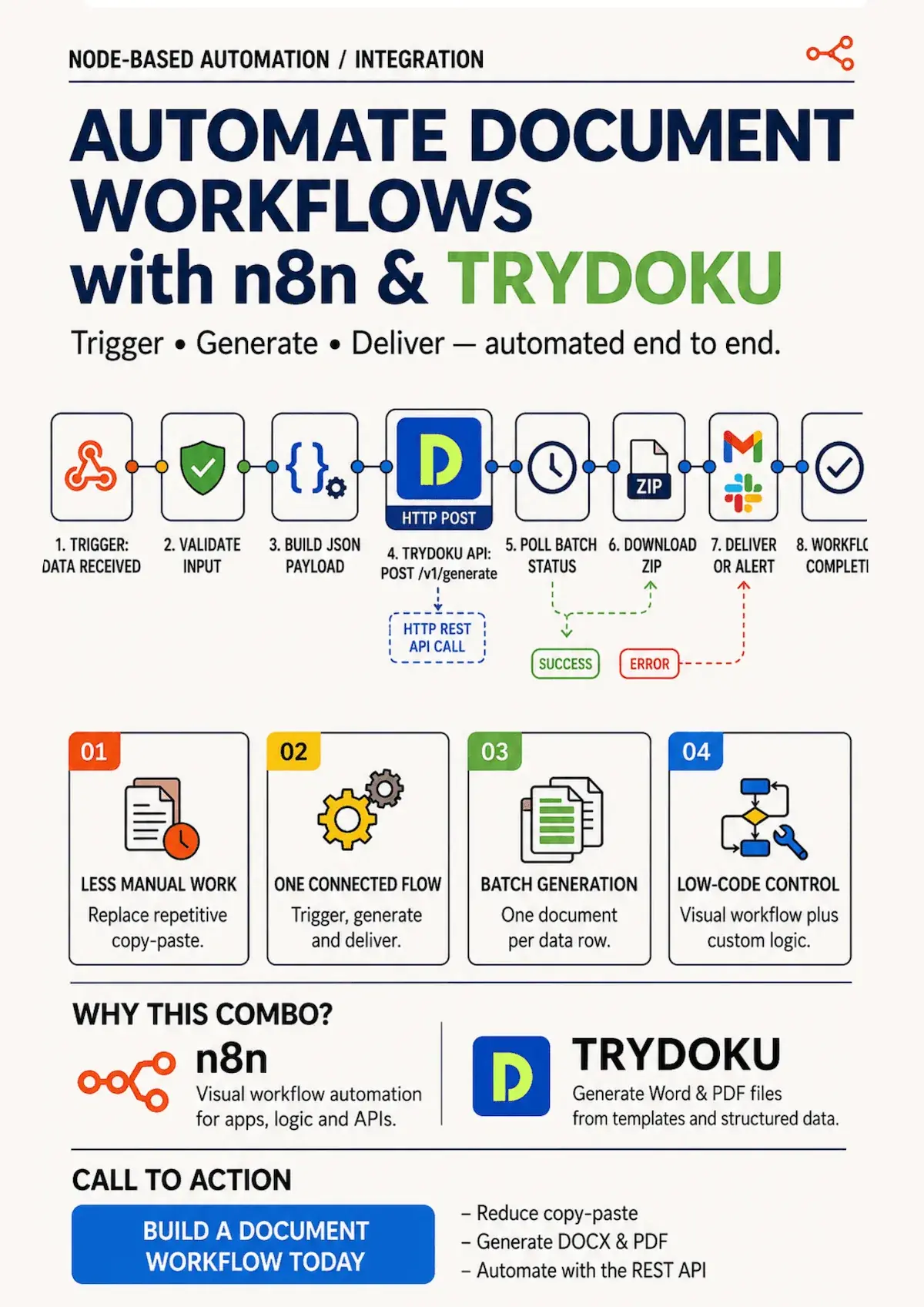
TRYDOKU uses DOCX templates with placeholders such as {{client_name}}. It also supports conditional blocks and repeating rows. That makes it a candidate when Word is the source document and the business team needs to keep control of the layout. The DOCX template to PDF API guide covers that specific workflow.
Test output quality with difficult examples
Do not approve an API after generating a one-page sample. Build a small test pack from real document patterns, with personal or confidential data removed.
Include:
- a short name and a very long name;
- a table with zero, one, and many rows;
- a paragraph that crosses a page boundary;
- headers, footers, page numbers, and images;
- non-ASCII characters used by your customers;
- optional clauses that are present and absent;
- empty values;
- a document with several pages;
- the fonts you expect to use in production.
Compare the output at normal zoom and in print preview. Check table widths, line breaks, page breaks, image placement, header alignment, and missing glyphs. If both DOCX and PDF matter, check both. A provider may generate a good editable file but a poor PDF conversion, or the reverse.
Keep this test pack. Run it again when the provider changes its renderer, when you update a template, or when your application starts sending new languages.
Check how data maps into the template
A useful API should make the data contract clear. Ask how it handles:
- missing fields;
- extra fields;
- null, false, zero, and empty strings;
- dates and time zones;
- decimal values and currency display;
- nested arrays for table rows;
- images and links;
- invalid variable names;
- data that is longer than the designed space.
Look for deterministic behavior. If a required field is missing, you should know whether the request fails, the placeholder remains visible, or a blank is inserted. Silent changes are difficult to operate.
Also decide where formatting happens. Sending an ISO date such as 2026-10-28 is clear, but the document may need 28 October 2026. Should the application send the display-ready value, should the template format it, or should the API apply a locale? Pick one owner so formatting rules do not drift between systems.
Ask about conditions and repeating data
Many business documents need line items, lists, or optional clauses as well as simple value replacement.
Ask the vendor to demonstrate your exact cases:
- a paragraph shown only when a boolean field is true;
- one of two alternative paragraphs;
- a table row repeated for an array;
- a repeated row that continues onto another page;
- an empty array;
- a value containing punctuation and special characters.
Do not assume a “logic” feature supports every expression. Some systems support simple truthy checks but not comparisons, calculations, or nested conditions. Simple rules can be an advantage because they are easier to review, but the limitation must match your needs.
In TRYDOKU, the documented conditional form uses {% if variable %}, optional {% else %}, and {% endif %}. Repeating data uses separate loop tags. The conditional content guide explains how to keep that logic readable.
Review the API contract as an operator
API documentation should cover authentication, request limits, error shapes, status behavior, and result retrieval, not only the first request.
Ask:
- Are API keys scoped, revocable, and visible only when created?
- Is generation synchronous, asynchronous, or both?
- How is a long-running job checked?
- Are webhook events signed?
- Can the same request be retried safely?
- Is there an idempotency key?
- How are rate limits reported?
- Are timeouts and maximum payload sizes documented?
- How long is a generated result available?
- Can a failed request be diagnosed without exposing document content in logs?
- Is there a service-status page and incident history?
If a capability is not documented, do not design around it. Ask the vendor in writing or build a small proof of concept.
TRYDOKU provides a REST API with Bearer authentication through API keys. Its current endpoints and request examples are in the API documentation. Treat that live reference as the source of truth rather than copying an old example from a blog post.
Design retry and duplicate handling before launch
Network requests fail in uncertain ways. Your application may time out after the provider has accepted the job. Retrying without a plan can create a second document or charge twice.
During evaluation, simulate:
- a connection closed before the response arrives;
- a request timeout;
- a provider error after data upload;
- a successful generation followed by a failed download;
- two workers sending the same business event;
- a webhook delivered more than once.
Your own system should use a stable business identifier for each intended document, such as an invoice ID and version. Store the provider job ID and the template version with the record. Even if the API offers idempotency, your database should know whether the document was requested, completed, delivered, or failed.
Do not let a generic retry library decide business behavior on its own. A safe retry for a status request may not be safe for a generation request.
Understand storage, deletion, and data location
Document generation often handles names, addresses, prices, salaries, or contract terms. Security review should cover the full data path, not only TLS.
Request clear answers to these questions:
- In which countries are application, worker, and storage systems located?
- Which subprocessors can receive document data?
- Are uploads and generated files stored? For how long?
- Can a customer delete a result early?
- What appears in application and support logs?
- Are templates encrypted at rest?
- How are keys and administrative access managed?
- Is customer content used for product training or analysis?
- Is a data processing agreement available for your plan?
- What happens to data after account closure?
“EU hosted” is useful information, but it is not a complete compliance answer. Data residency describes location. GDPR compliance also depends on purpose, contracts, retention, access, lawful basis, and your own use of the service.
TRYDOKU states that its primary application and storage servers are in Frankfurt, Germany, and that generated DOCX and PDF outputs are automatically purged within 24 to 72 hours. Its current controls and DPA availability are described on the Security and Trust page. Verify that page and the applicable agreement during procurement.
Calculate the full price per successful document
Pricing pages often show the cheapest unit in the largest package. Build a model based on your own traffic.
Include:
- generation charges;
- separate PDF conversion charges;
- storage or download charges;
- failed-request charges;
- template-editor seats;
- support plans;
- minimum monthly spend;
- credit expiry;
- taxes and currency conversion;
- engineering time for maintenance;
- the cost of running a fallback process.
Model a normal month, a busy month, and a retry-heavy incident. If volume is seasonal, check whether unused capacity expires. If documents vary greatly in page count, confirm whether price is per file, per page, or per operation.
TRYDOKU uses credits and publishes current packages on its pricing page. Do not copy a price into a long-lived architecture document. Link to the live pricing page and record the date on which you evaluated it.
Measure limits with a proof of concept
Create a short evaluation project before you build the full integration. It should be small enough to discard but realistic enough to expose the hard parts.
A useful proof of concept does the following:
- uploads or selects a real template with sensitive details removed;
- sends a batch containing normal and difficult records;
- records request and completion identifiers;
- downloads the result;
- validates the file type and expected document count;
- handles a deliberate failure;
- retries according to your chosen rule;
- deletes or expires test artifacts;
- records cost for the run;
- lets the template owner make one wording change without developer help.
Define pass and fail criteria before the test. “The files look good” is not enough. A better criterion is: all placeholders are replaced, the 20-row table stays within the page width, the PDF uses the approved font, and a failed record can be traced without logging its contents.
Compare support and change management
An API becomes part of your production system. Ask how the vendor announces breaking changes, renderer upgrades, deprecations, and maintenance. Check whether API versions are explicit and how long old versions remain supported.
Support quality is easier to assess with a real question. Send one precise issue from the proof of concept. Note whether the answer explains the cause, asks for unnecessary document data, and gives a safe way to share a reduced example.
You also need an internal owner. Someone must approve template changes, review output after renderer changes, rotate keys, and update the integration when the data contract changes.
A scorecard for the final decision
Score each provider with evidence from your test rather than marketing copy.
| Area | Weight | Evidence to collect |
|---|---|---|
| Template fit | 20% | Owner can make a safe change |
| Output quality | 20% | Difficult test pack passes |
| API reliability | 15% | Errors, retries, and status are clear |
| Security and privacy | 15% | Location, retention, contracts, controls |
| Data model | 10% | Conditions, arrays, missing values |
| Operations | 10% | Logs, status, versioning, support |
| Total cost | 10% | Normal, peak, and failure scenarios |
Adjust the weights. A payroll product may give security more weight. A design-heavy proposal system may give output quality more weight. Keep notes and links beside each score so another reviewer can challenge the result.
Questions to take into a vendor call
Use these as a final checklist:
- Can our current Word template be used without rebuilding it?
- Can non-developers safely change approved wording?
- What happens to missing, false, and empty values?
- Can one request contain nested repeating rows?
- How do we prevent duplicate generation after a timeout?
- Where are templates, request data, and outputs processed and stored?
- What is deleted automatically, and when?
- Which limits apply to files, rows, requests, and result downloads?
- Which failures consume billable units?
- How are breaking changes announced?
- Can we run our own test pack before signing a contract?
The answers should be specific enough to put into an architecture decision record.
Make the decision with files, not slides
Compare document generation APIs by testing the document that matters. Use a difficult template, controlled data, a failed request, and a real template change. Measure output, operations, privacy, and cost together.
If DOCX templates and spreadsheet-shaped data match your use case, you can create a TRYDOKU account and use a reduced test pack to evaluate the workflow. Keep the proof of concept separate from live customer data until your security and legal reviews are complete.
Frequently asked questions
What is the most important feature in a document generation API?
Fit with your template owner is often more important than the longest feature list. A technically capable API still creates friction if every wording change requires a developer.
Should an API return PDF or DOCX?
Choose based on the next step. PDF is suited to fixed distribution and printing. DOCX is useful when a person must edit the generated file. Some workflows need both.
How long should a proof of concept take?
Long enough to test a real template, difficult data, and failure handling. Keep the scope narrow. The goal is evidence for the buying decision, not a hidden production build.
Is EU hosting enough for GDPR compliance?
No. Location is one factor. You must also assess roles, lawful basis, contracts, subprocessors, retention, access controls, and your own processing purpose.
Should price be the final deciding factor?
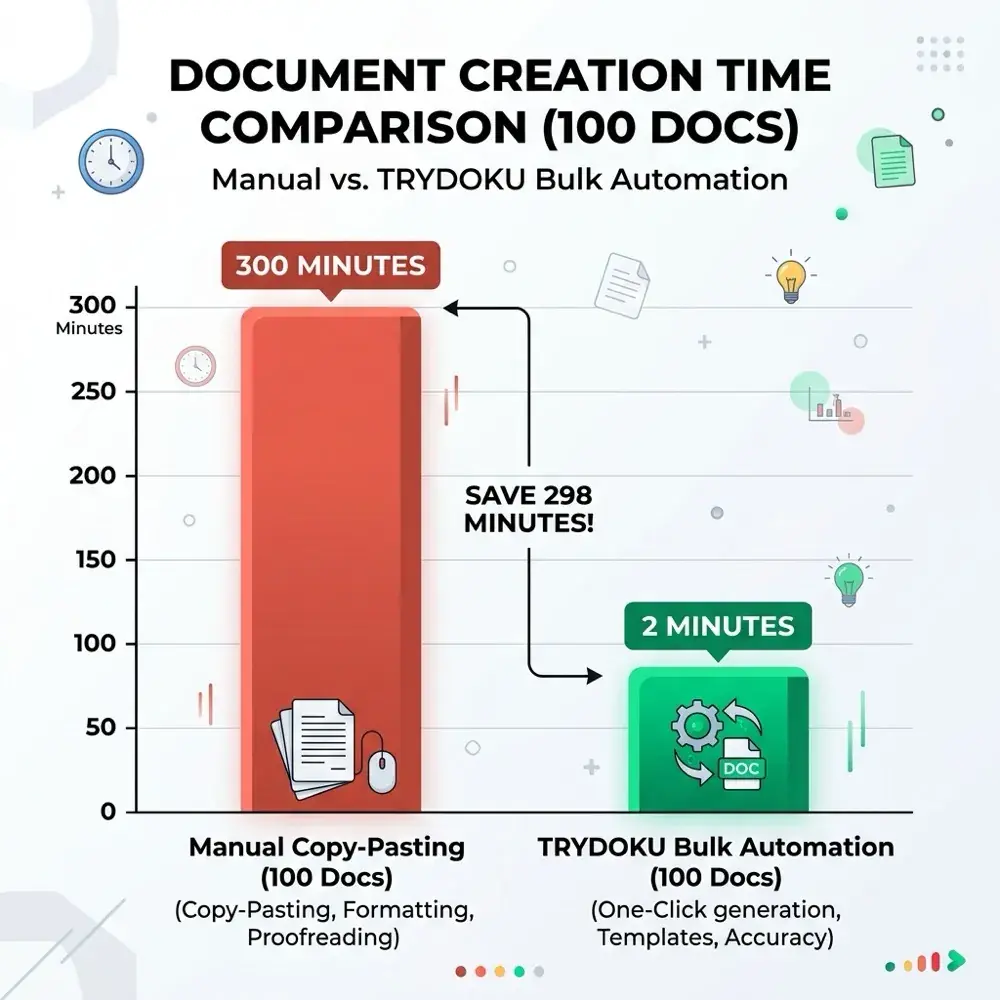
Price matters, but compare cost per successful, usable document. A cheap API that needs manual layout repair or frequent engineering support can cost more overall.